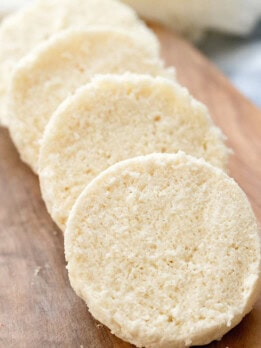
2 Ingredient Microwave Bread
This easy microwave bread recipe is just 2 ingredients and takes about 30 seconds to cook. The bread comes out soft and fluffy.
Ingredients
- 4 tbsp (31 g) self-rising flour
- 2 tbsp (1 oz) milk, any milk including dairy-free milk will work
Instructions
- In a large oversized microwave-safe mug, add ingredients. Stir with a spoon until flour is completely incorporated and a dough forms. Your dough should be wet and sticky. If your dough is too dry, you can add a tiny splash more of milk. When you are done stirring your dough, it will likely be bunched up in the middle of your mug. Use your spoon to spread the dough out so that it reaches the edges of the mug, filling the bottom of the mug evenly. Try your best to smooth and even out the surface.
- Place your mug in the microwave and cook at full power for about 30 seconds. The bread should be puffy (but will remain pale white in color) and the surface should look cooked.
- Use a large spoon to run across the edges of the bread to loosen the bread from the edges of the mug. Then slide your spoon to the bottom of the bread so that you can use your spoon to lift the entire bread out in one piece. Slice bread in half and enjoy as is or with your favorite spread. You can also toast your bread.
Notes
- Microwave wattages can differ. My microwave is 1100 watts. If your wattage is higher or lower, you may need to adjust cooking time. ( I haven't found noticeable difference when using a 1000 watt versus a 1100 watt but anything higher or lower will likely need a few seconds time adjustment.) Be careful not to overcook the bread. It will make the bread turn hard.
- Please see post for tips on the best type of mug to use.
- To make your own self-rising flour, add 1 cup all purpose flour, 1.5 tsp baking powder and 1/4 tsp salt to a bowl. Whisk to combine. Measure out 4 tbsp (or 1/4 cup) for the recipe.
- 4 tbsp is the same as 1/4 cup. If you prefer to use a 1/4 cup to measure, that is fine. I used tbsp because then you only need to use one measuring spoon for the entire recipe.
- This recipe should work with most milks such as whole milk, low fat milk, almond milk, soy milk, oat milk.
- This recipe yields one bread about the size of an English muffin that can be sliced in half for two small slices of bread. If you need more, I don't recommend doubling the recipe. Instead, make the recipe twice in two separate mugs and cook them separately. Doubling the recipe can lead to the bottom of the bread not cooking properly. It's also not a good idea to try to cook two mugs at the same time because it often leads to uneven cooking.
- If you don't own a microwave, I have a baked version of this bread.
Serving: 1slices, Calories: 56kcal, Carbohydrates: 12g, Protein: 2g, Fat: 1g, Saturated Fat: 1g, Sodium: 182mg, Sugar: 1g, NET CARBS: 12
The nutrition information provided are only estimates based on an online nutritional calculator. This is not a comprehensive list of all the nutrients in the recipe (i.e., does not include vitamins, cholesterol, etc). I am not a certified nutritionist. Please consult a nutritionist or doctor for accurate information and any dietary restrictions and concerns you may have.
Did you make this recipe?Please leave a star rating and review below!