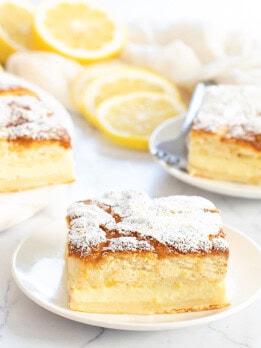
5 Ingredient Lemon Magic Cake
This unique cake magically separates into 3 distinct layers as it bakes. It's an impressive looking dessert that only needs 5 ingredients and is easy to make.
Ingredients
- 4 large eggs, whites and yolks separated
- 3/4 cup (96 g) all purpose flour
- 3/4 cup (148 g) granulated white sugar
- 2 cups (16 fl oz/473 ml) low fat milk (1% or 2%), divided
- 5 tsp (10 g) lemon zest, about 2 large lemons
Instructions
- Preheat oven to 325°F (163°C). It's important that your oven is preheated to the right temperature before your cake batter is done because the cake needs to go in the oven immediately after it is prepared. Line an 8 x 8 inch baking pan with parchment paper leaving some overhang for easy lifting later.
- In a larger mixing bowl, add egg yolks, flour, sugar and 1/2 cup (4 fl oz) of milk. It's important to add some of the milk before you start beating. If you try to beat without any milk, your flour will become a paste and you won't be able to mix out the lumps later. Also make sure to only add 1/2 cup right now. If you add all of the milk you will not be able to mix your batter because it will be too liquidy. Beat on high speed until batter is smooth and no flour lumps remain. Once batter is smooth, add in remaining milk (1 1/2 cups). Reduce speed to medium low on mixer and mix until the milk is incorporated into the batter. Your batter will be very thin.
- In a separate clean mixing bowl, add egg whites. Beat egg whites on medium high speed (I did mine at speed 8 out of 10) until stiff peaks form. Your mixing bowl and mixer must be completely clean before adding and beating the egg whites, otherwise the egg whites will not form stiff peaks.
- Gently stir and fold in 1/3 of the egg whites into the cake batter with a spatula. Because the cake batter is so thin, you do need to swirl and fold to make sure the egg whites are fully incorporated. Make sure to fold all the way from the bottom of the bowl, otherwise the liquid batter at the bottom won't get fully mixed with the egg whites. You do not need to fold until no egg white streaks remain. There should be lumps of egg whites. Just fold until the egg whites are incorporated into the batter. Repeat with the next 1/3 and then final 1/3. For the final 1/3, it's okay if you have larger lumps of egg white remaining. When you add the lemon zest, it will immediately start breaking down the egg white lumps and make them smaller so it is better if they are a little bigger. Your batter should look light, airy and be very liquidy.
- Finally, add in the lemon zest and gently stir it in. Make sure to add the lemon zest last because it will start to curdle your batter and break down the egg whites immediately. Your batter should look slightly curdled.
- Pour batter into the prepared cake pan. Bake for about 60-65 minutes, or until cake is done and is evenly browned on top. If you are unsure if your cake is done, it is better to bake a little longer (5 minutes or so) to make sure it is done so that your cake does not deflate. Turn off the oven but don't remove the cake yet. Let it sit in the oven for 5 minutes with the oven off. During this time, the cake will deflate a little. After 5 minutes, remove the cake from the oven and let it cool. The cake should be slightly wobbly. As the cake cools it will deflate even more.
- Once cooled, put the cake in the fridge for a few hours or overnight. Doing so will help the cake flavors develop, firm up the layers and also reduce any eggy smell that is normal with just baked souffle type desserts. Before serving cake, you can dust cake with powdered sugar. Cut cake with a large sharp knife. See notes for the difference of the cake texture if you eat it the same day versus the next day. Store any leftovers in the fridge.
Notes
- Make sure you don't beat your egg whites until after the rest of your cake batter is ready. You need to fold them in immediately otherwise they start to weep.
- Like many desserts made with folding in egg whites, the cake will be a little eggy when it is first done but after it is sits in the fridge the flavors will settle and develop better and it shouldn't taste eggy.
- This cake only uses lemon zest for the lemon flavoring because adding lemon juice will prevent the cake layers from forming properly. If you want a stronger lemon flavor you can add a few drops of lemon extract at the same point you add in the lemon zest. Make sure to only add the lemon zest at the very end because the batter will start to curdle.
- Make sure your oven is ready and preheated before you finish making your cake batter. You want the cake to go in the oven immediately after it is done, otherwise the batter will separate and break down too much if you let it sit out waiting for your oven to finish preheating.
- We found this cake works best with low fat milk. You can use whole milk but the cake layer will be thinner.
- The texture of the cake does change a little if you eat it a few hours after it is baked versus the next day. When it is first baked, you have a light sponge on top, a cream filling in the middle and a firmer flan layer at the bottom. If you let the cake settle overnight, the bottom two layers firm up more. The middle layer becomes a creamy custard. The bottom layer becomes something like a very moist pie crust. The cake can be served at room temperature or cold. Any uneaten leftovers should be stored in the fridge.
Serving: 1slice, Calories: 118kcal, Carbohydrates: 21g, Protein: 5g, Fat: 2g, Saturated Fat: 1g, Sodium: 50mg, Fiber: 0.3g, Sugar: 15g, NET CARBS: 21
The nutrition information provided are only estimates based on an online nutritional calculator. This is not a comprehensive list of all the nutrients in the recipe (i.e., does not include vitamins, cholesterol, etc). I am not a certified nutritionist. Please consult a nutritionist or doctor for accurate information and any dietary restrictions and concerns you may have.
Did you make this recipe?Please leave a star rating and review below!