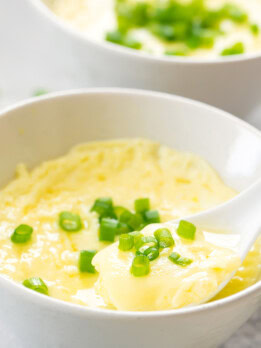
Microwave Steamed Egg
A quick and easy shortcut method for making steamed eggs. The egg custard still comes out very soft and silky.
Ingredients
- 1 large egg
- 4 oz chicken broth
- salt, as needed
- 1 scallion, thinly sliced
Instructions
- In a medium microwave-safe bowl, add egg and broth. Whisk until egg is thoroughly beaten and mixed with the broth. If your broth is low sodium or unsalted, you can stir in a pinch of salt. Your liquid level should only fill about half of the bowl, so your egg has enough room to rise.
- Cover the surface of the bowl with a paper towel. Set your microwave cooking power to 700 watts (or as close to 700 watts as possible). Cook the egg for approximately 2 minutes, or until done. I recommend starting with 1 minute 30 seconds and then checking on the egg and cooking more as needed in 15-second increments.
- Let the egg cool a few minutes before eating. Garnish with scallions. I also like to add a drizzle of toasted sesame oil for additional flavor.
Notes
- The key to cooking steamed eggs in the microwave is cooking them at a lower cooking power. To cook at 700 watts, you need to select the power level before the microwave starts cooking. For example if your microwave is 1000 watts, you would select power level 7 to cook at 70% or 700 watts. Cooking the eggs at too high power will cause them to be unstable and they may explode in the microwave.
- You can make a larger batch, but you will need to increase cooking time.
- Do not try to cook multiple single eggs at once, this will lead to them cooking unevenly. If you want to make multiple single ones, cook them one at a time.
- For an even smoother egg consistency, you can filter the whisked egg broth through a strainer before adding it to the bowl.
- When the egg is finished cooking, there will still be some broth not absorbed by the egg. This is completely normal.
- Estimated Nutrition information does not include salt added and is calculated using low sodium chicken broth.
Serving: 1g, Calories: 103.06kcal, Carbohydrates: 2.65g, Protein: 9.61g, Fat: 6.09g, Saturated Fat: 1.97g, Sodium: 116.45mg, Fiber: 0.31g, Sugar: 0.64g, NET CARBS: 2
The nutrition information provided are only estimates based on an online nutritional calculator. This is not a comprehensive list of all the nutrients in the recipe (i.e., does not include vitamins, cholesterol, etc). I am not a certified nutritionist. Please consult a nutritionist or doctor for accurate information and any dietary restrictions and concerns you may have.
Did you make this recipe?Please leave a star rating and review below!