

4 Ingredient Lemon Cake (No Flour, Butter or Oil)
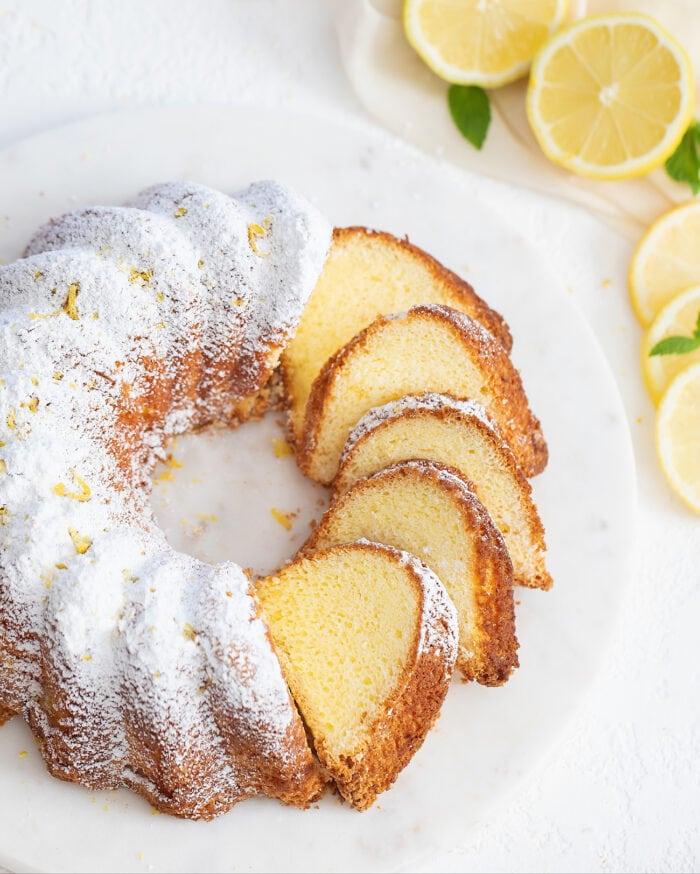
This lemon cake is so fluffy and soft. It has the texture of regular cake but doesn’t contain any flour, butter or oil. This cake stores well and is great to make for brunch, afternoon tea or dessert.
Why You’ll Love This Recipe
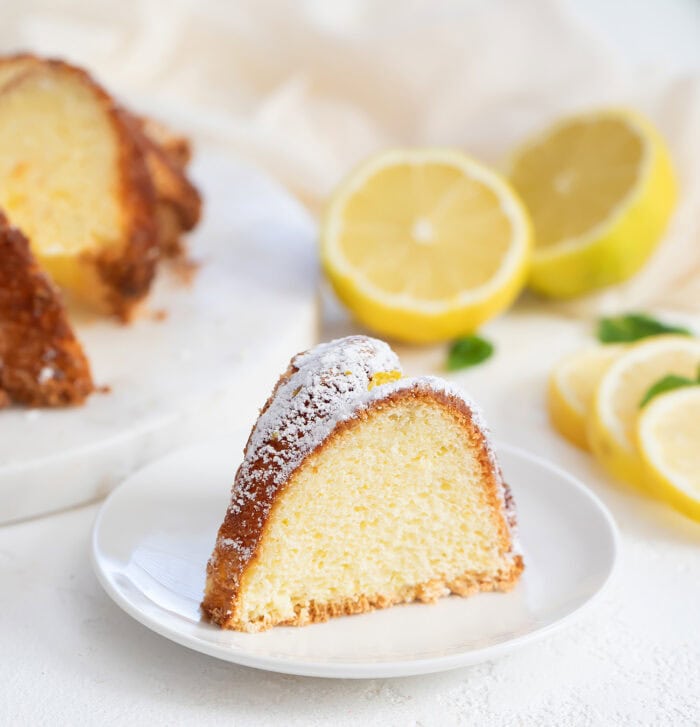
- This is a flourless lemon cake with a very light and feathery texture. It is similar to a sponge cake but lighter. It also has a crispy meringue-cookie bottom.
- It’s not overly sweet, but you can add more sweetness by adding powdered sugar on top or you can also serve it with a lemon icing for even more sweetness and lemon flavor.
- This cake is a lemon version of my flour-free 3 Ingredient French Savoie cake. Known as Gâteau de Savoie or Biscuit de Savoie. The original cake was created in the 14th century in France when a pastry chef for the Count of Savoy created the cake.
- The cake has been changed over time and is similar to a modern-day sponge cake. It traditionally relies on a combination of starch and flour but my version doesn’t include flour at all.
Ingredients
- Lemon Zest
- Potato Starch
- Eggs
- Sugar
Lemon zest: To add a fragrant and zesty lemon essence to the cake, I used fresh lemon zest. I don’t recommend using any lemon juice. Lemon juice will alter the texture of the cake and cause the batter to separate.
Potato starch: Potato starch is a common cooking ingredient used to thicken sauces and is an excellent coating for fried foods. While not as often used in baking, it is the perfect starch for this cake. It is sturdy enough to hold up while still keeping the cake very light and soft. We did test this recipe with many other starches and they did not work. You can find potato starch at most grocery stores or online.
Eggs: Eggs are the key to creating the structure for this cake and keeping it so light and airy. Eggs provide the necessary fat needed for the cake since there is no butter or oil.
Sugar: The cake is sweetened with regular granulated white sugar.
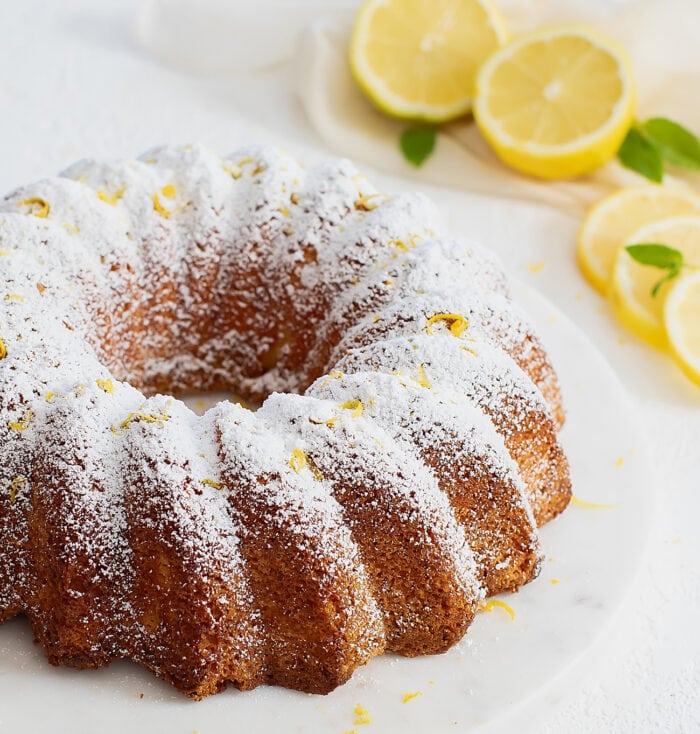
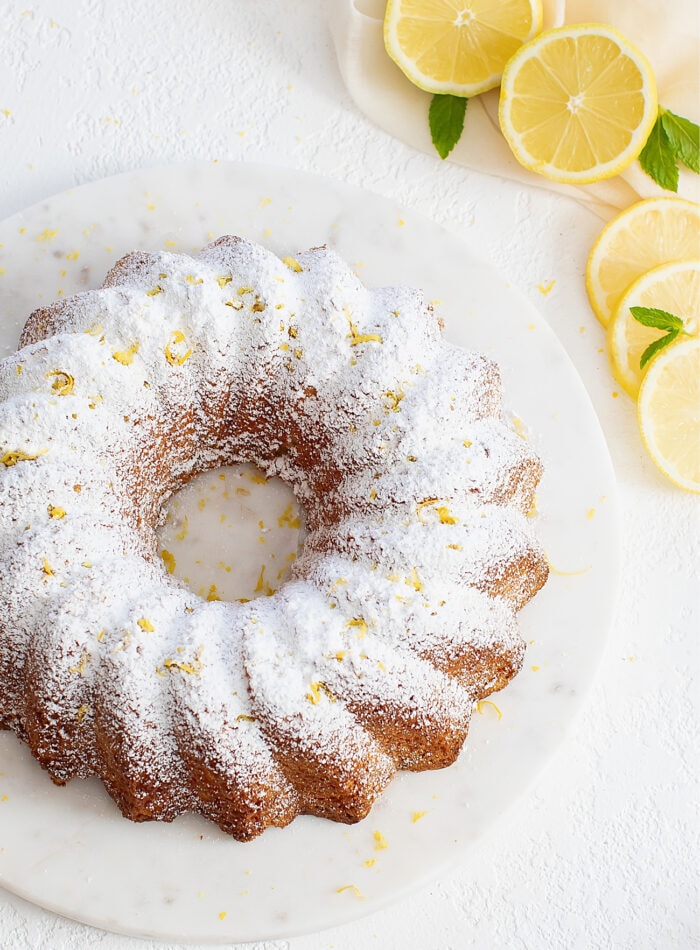
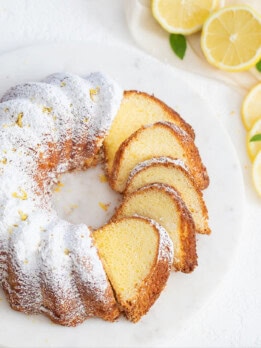
The cake does look a bit plain on its own so I like to dust the top with powdered sugar before serving. I’ve also served it with a simple lemon icing as well which works really well and is a great version to serve if you prefer a sweeter cake.
How to Make No Flour Lemon Cake
- Beat the egg whites: The egg whites are first beaten in a large bowl with half of the sugar until stiff peaks form. They are then set aside.
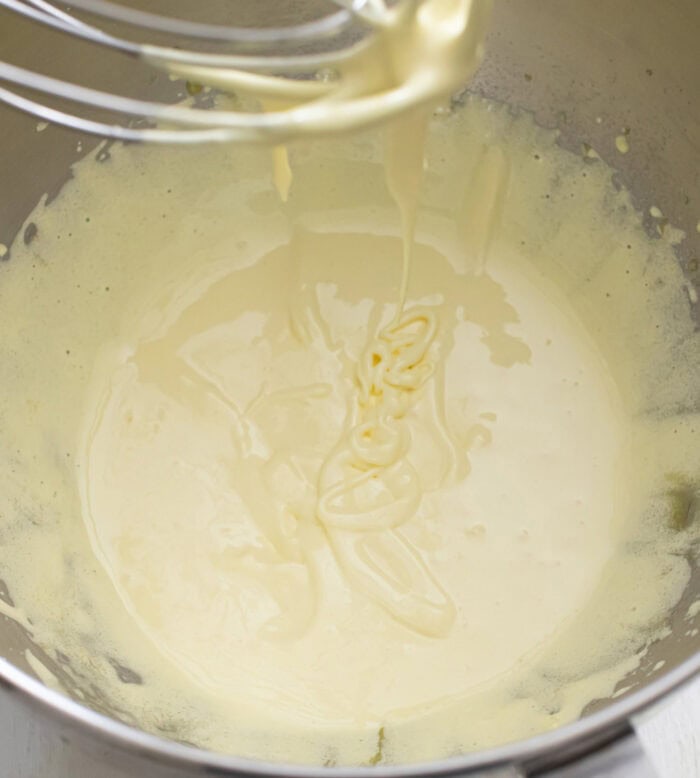
- Beat the yolks and sugar: The egg yolks are then beaten in a separate bowl with the remainder of the sugar until the batter is very pale yellow and thick. When the egg mixture is ready, the mixture that drips off of the beater should be able to sit on top of the batter for several seconds before sinking in.

- Add the starch and egg whites: The potato starch is then sifted in. Next, the egg whites are gently folded in. Finally, the lemon zest is gently folded in.
- Bake the cake: The cake batter is then poured into the prepared pan and baked.
Cake texture
This cake has a very light and feathery texture. It is similar to a sponge cake but lighter than most types of sponge cakes. The cake also has a crispy meringue-cookie bottom.
The cake is not overly sweet. You can add more sweetness by adding powdered sugar on top or you can also serve it with a lemon icing for even more sweetness and lemon flavor.
More Flourless Cake Recipes
- 2 Ingredient Apple Cake
- 2 Ingredient Chocolate Cake
- 4 Ingredient Cloud Cake
- 4 Ingredient Banana Yogurt Cake
4 Ingredient Lemon Cake (No Flour)
Ingredients
- 4 large eggs, whites and yolks divided
- 1 cup (227 g) granulated white sugar, divided
- 2/3 cup (102 g) potato starch
- 2 packed tbsp (9 g) lemon zest
Instructions
- Preheat your oven to 350°F (175°C). Generously spray the interior of a 9-inch bundt cake pan with non-stick baking spray. Lightly dust the pan with potato starch and tap out any excess. Set aside. If flour is not an issue for you, you can also grease with a baking spray with flour like PAM baking spray with flour and then you don't need to dust with potato starch.
- Add the egg whites to the bowl of a stand mixer. Using the wire whisk attachment, beat at medium speed until the eggs are foamy. With the machine still running, slowly add 1/2 cup of the sugar (1 tbsp at a time). Increase speed to high and continue to beat until mixture is thick, glossy and stiff peaks form. Transfer the meringue to a clean bowl and set it aside.
- Add the egg yolks and remaining 1/2 cup sugar to the stand mixer bowl. Whisk at high speed until the mixture is very thick, has more than doubled in volume, about 4 minutes. When you lift the whisk, the mixture should ribbon down and hold its form on top of the mixture for several seconds before sinking in. See photo in post for reference.
- Sift the potato starch with a fine mesh strainer into the egg yolk mixture and mix with a spatula until evenly combined. It will be stiff and very thick.
- Add in 1/3 of the egg whites, gently folding the egg whites into the egg yolk mixture with a spatula until just combined. Be careful not to deflate the egg whites too much. Repeat with the next 1/3 and then the final 1/3 of egg whites.
- Sprinkle in the lemon zest and gently fold it in to the batter with your spatula just until it is evenly combined into the batter.
- Pour the batter into the prepared bundt pan and smooth the top with a spatula.
- Bake in the preheated oven for about 40 minutes or until the cake is golden brown and a toothpick inserted into the center comes out clean. When you apply light pressure to the surface it should feel firm and should not completely sink in.
- Remove the cake from the oven and let it cool in the pan for about 20-30 minutes, or until cake and cake pan no longer feel to hot to touch. Then invert the cake onto a plate to cool completely. It is important that you unmold the cake from the cake pan after 20-30 minutes and not wait too long. If you wait for the cake to finish cooling, it will start to stick to the pan. If you unmold it after letting it cool only 20-30 minutes, it should slide out easily. In addition, I found that letting the cake cool fully on a plate with the crispy meringue layer on the bottom of the plate helps the meringue layer stick to the cake and not break off as easily when cutting the cake. When cake is finished cooling, you can decorate the cake before serving. I like serving with a dusting of powdered sugar or drizzling it with lemon icing. Use a large sharp knife to gently cut into the cake to serve.
Notes
- This cake works best in a 9-inch bundt pan that holds a 10 cup capacity. If you use a bigger cake pan then the cake won't rise very high in it.
- You want to generously grease your bundt pan so that the cake unmolds easily.
- When slicing the cake, use a large sharp knife and gently cut into it. This will help prevent the cake from getting squished and also help prevent the crispy meringue layer from breaking off.
- Make sure to sift the potato starch in with a fine mesh strainer so that you don't overmix it trying to incorporate it in. Use a spatula to mix in it.
- I use Bob's Red Mill's potato starch.* Potato starch is an ingredient that I am able to find at most grocery stores like Vons (Safeway), Ralphs (Kroger), Whole Foods and also online on Amazon.
- *This product link is an affiliate link. This means I earn a commission from qualifying purchases.
- You want to make sure to add 2 packed tablespoons of lemon zest or else the cake won't have enough lemon flavor. You will need the zest from approximately two large lemons. I don't recommend adding lemon juice to the cake batter because it will cause the batter to separate when baking.
- Optional lemon glaze: Add 2 cups of powdered sugar to a medium bowl. Add 2-4 tbsp of lemon juice and whisk until powdered sugar is completely dissolved. Start with just 2 tbsp of lemon juice and if the glaze is too thick, add more. If you prefer an even thinner glaze add more lemon juice or make the glaze thicker by adding more powdered sugar. Spoon the glaze over the top of the cake after it has cooled and let it drip down the sides. I also like to sprinkle some fresh lemon zest over the glaze.
Very light, soft, and fluffy texture on the inside. I added a bit of vanilla paste and mixed the lemon zest with the yolks and sugar, so as not to overmix or deflate the batter later. My husband has Celiacs, and his appetite has been low because of recent chemo as well, but he liked this enough to have three slices through the day, and it was lovely with fresh raspberries. I will definitely make it again, though maybe with a touch less sugar for myself, and want to give it a try with orange zest, or with cocoa instead of potato starch. I will be sharing some with a colleague tonight who also has family members with Celiacs. Thanks for sharing!
I’m so happy to hear you and your husband enjoyed this cake!
Hello! From the USA! I just read your recipe for the lemon Bundt cake. Your cake is very beautiful with the sprinkling of powdered sugar. I love lemon cake. I want to make it… but don’t have potato starch. Can I substitute flour, and how much will I need to use to make my cake. Thanks!
Hello! We did test this recipe with many other starches and they did not work, so we recommend using the potato starch! Not sure where in the US you are located, but I am also in the US and haven’t had any issues finding potato starch. For me, it is at most supermarkets (Vons, Kroger, Walmart, Whole Foods) and also online on Amazon.
Very nice!
Thank you!! Glad you enjoyed this recipe!
Can’t really find potato flour. any other flour suggestions? Thanks!
We did test this recipe with many other starches and they did not work. I use Bob’s Red Mill’s potato starch. Potato starch is an ingredient that I am able to find at most grocery stores like Vons (Safeway), Ralphs (Kroger), Whole Foods and also online on Amazon!
Where and how do you get. Potato Starch please ?
Hi Elena! I use Bob’s Red Mill’s potato starch. Potato starch is an ingredient that I am able to find at most grocery stores like Vons (Safeway), Ralphs (Kroger), Whole Foods and also online on Amazon.
Modified or unmodified potato starch
We use Bob’s Red Mill’s potato starch which is unmodified!