

4 Ingredient Lemon Cake Donuts (No Eggs, Dairy, Butter or Oil)
These lemon cake donuts are soft and tender. They only need 4 ingredients and don’t require any eggs, dairy, butter or oil. The donuts are easy to prepare and you don’t even need a mixer to make them.
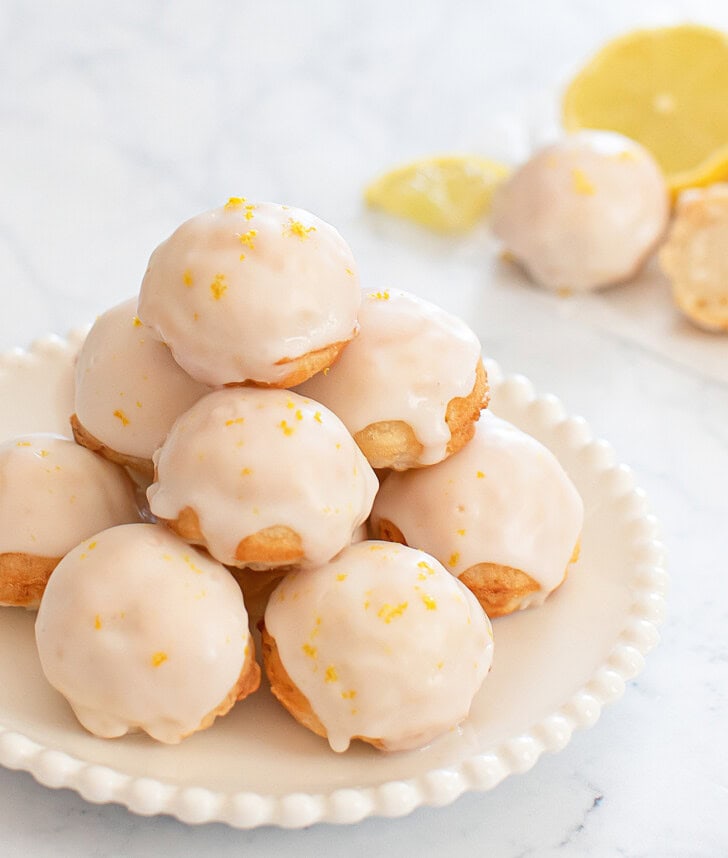
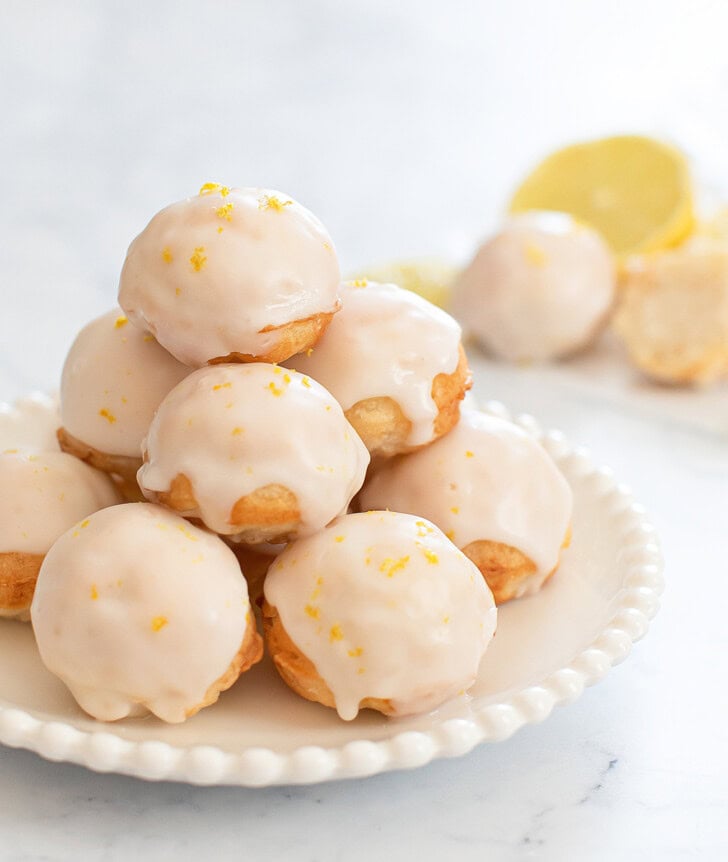
These lemon flavored cake donuts are soft, fluffy and light. I made mine as donut holes but you can bake them as mini muffins or regular sized donuts using a donut pan.
Ingredients
- Lemon
- Self-rising flour
- Canned coconut milk
- Sugar
Lemon: Fresh lemon juice and zest are used to give the donuts a nice lemon flavor. If you want a stronger lemon flavor, I recommend adding more zest or a few drops of lemon extract. I don’t recommend increasing the lemon juice because it will make the donut texture turn gummy.
Self-rising flour: Self-rising flour is a flour blend that already includes a leavening agent and sodium. Self-rising flour saves a few extra steps for making these donuts but you can also make a homemade self-rising flour blend using all purpose flour, baking powder and salt.
Canned coconut milk: This recipe uses canned coconut milk. It must be canned coconut milk and not the drinking kind of coconut milk. Canned coconut milk is used for baking and cooking and contains a higher amount of fat. Drinking coconut milk does not have enough fat and will not work for this recipe. I recommend using canned coconut milk with 14 grams of fat per 1/3 cup serving. If your canned coconut milk contains less fat than that, the batter will not rise as well and the donut texture will be more dense and gummy.
Sugar: These donuts are lightly sweetened with regular granulated sugar. You can likely substitute with another granular sugar substitute. You want to avoid using liquid sweetener because that will make the batter too wet.
How to Make Lemon Donuts
- The coconut milk, lemon juice and sugar are whisked together until evenly combined.
- The flour is mixed in with a spatula until fully incorporated and no lumps remain. Stir in the lemon zest just until combined.
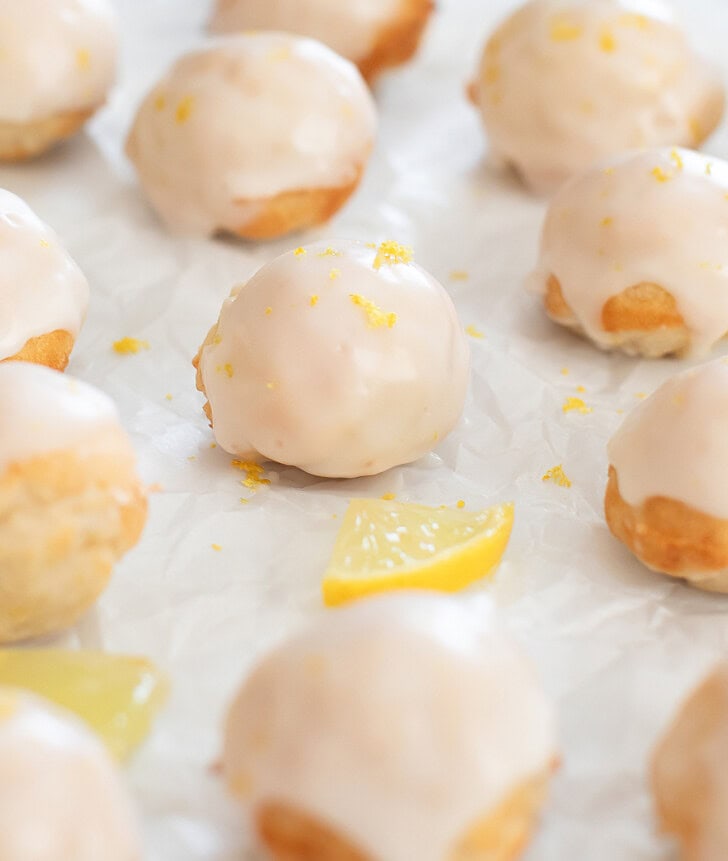
- Scoop the batter into your prepared pan. Bake the donuts until they are puffed and cooked through. Allow the donuts to cool a little before serving. You can also dust them with powdered sugar or dip them in glaze before serving. I added a simple lemon glaze on mine.
Expert Tips
- It’s important to use coconut milk with 14 grams of fat per 1/3 cup serving. Coconut milk with less fat will cause the donuts to turn out gummy and dense.
- The donuts are very lightly sweet on their own since donuts are usually topped with glaze or sugar. If you don’t want to add any glaze or sugar, you can increase the sugar in the batter by 2-3 tablespoons.
- If you want a stronger lemon flavor, add a few drops of lemon extract or increase the amount of lemon zest. Do not add more lemon juice because that will make the donuts have a gummy texture.
More Lemon Recipes

4 Ingredient Lemon Cake Donuts
Ingredients
- 1/2 cup (118ml) canned coconut milk, see note before starting, room temperature
- 2 tbsp (30ml) lemon juice + zest from 1 small lemon
- 1/4 cup (50g) granulated white sugar
- 1 cup (138g) self-rising flour, see note before starting
Instructions
- If you are baking the donuts in the oven, preheat your oven to 350°F (175°C). Grease your baking pan with nonstick cooking spray.
- Whisk the contents inside the can of coconut milk with a small whisk. This is important because the fat often separates. When the mixture is uniform, measure out 1/2 cup for the recipe.
- Add canned coconut milk, lemon juice and sugar to a large mixing bowl. Whisk to combine.
- Add in the flour and mix it in with a spatula. Using a spatula will help prevent overworking the batter. Mix until there no more flour lumps. Add in the lemon zest and stir until just combined.
- Use a 1 tablespoon cookie scoop to scoop and release the batter into your prepared pan. The amount you need to scoop may vary depending on the pan you are using. My donut hole pan had a 1 tablespoon capacity for each donut hole. If using a mini muffin pan or a larger cake hole pan, you may need 1.5 tablespoons of batter. If you are using a regular donut pan, it is better to pipe the batter into the pan.
- Bake the donuts for about 15-25 minutes or until lightly golden, puffed and cooked through. If you apply light pressure to the surface, it should bounce back. If cooking in a donut hole or cake pop maker instead of the oven, the donuts will only need a few minutes to cook (around 5-10 minutes. Using the light indicator will help you determine when the donuts are done).
- Allow the donuts to cool slightly before serving. You can also dust the donuts with powdered sugar or dip them in lemon glaze before serving. The lemon glaze recipe I used is in the recipe notes. Store uneaten donuts in an airtight container in the fridge or freezer.
Notes
- Donut pan note: You can cook these donuts in a variety of pans or molds. I made mine using my cake pop maker* which makes 12 at a time, with 1 tbsp of batter for each mold. You can also use cake pop molds meant for baking in the oven. Some cake pop molds have a bigger capacity (about 1.5 tbsp of batter). Baking time is going to vary depending on the size of your baking pan. If you don't have a cake pop pan, a mini muffin pan works well. You will need 1.5 tbsp of batter for each cavity and will get about 11 mini donut muffins. You can also make these in a regular donut pan but you'll end up with less donuts.
- Canned coconut milk note: Make sure to use canned coconut milk with 14 grams of fat per 1/3 cup serving. Canned coconut milk with less fat will not work well for this recipe. Brands like Thai Kitchen Organic do not contain enough fat. I used Whole Foods Organic Canned Coconut Milk.* Make sure you use canned coconut milk and not the carton/drinking type of coconut milk.
- Self-rising flour note. There are 2 main kinds of self-rising flour sold in the US. One that is a lower protein (2 grams per 1/4 cup serving) flour and one that has a regular amount of protein (3 grams per 1/4 cup (30g) serving). The amount of protein affects how much liquid is absorbed. For this recipe, I tested it with Gold Medal self-rising flour* (regular amount of protein). Please use a self-rising flour with a regular amount of protein (3 grams per 1/4 cup), or make your own self-rising flour with the recipe below.
- *These product links are affiliate links. This means I earn a commission from qualifying purchases.
- Homemade self-rising flour: Whisk together 1 cup all purpose flour, 1.5 tsp baking powder and 1/4 teaspoon salt. Make sure your all purpose flour has a regular amount of protein (3 grams per 1/4 cup). Most brands in the US contain this amount but there are some brands with higher protein (4 grams per 1/4 cup) such as King Arthur Flour and Bob's Red Mill, which will not work well for this recipe.
- Optional lemon glaze:
- 2 cups powdered sugar
- 3-4 tbsp lemon juice, or more as needed
- Combine powdered sugar and lemon juice and whisk together until you have a smooth glaze. You can add more lemon juice or water to thin out the glaze or add more powdered sugar to thicken the glaze.
- Estimated nutrition is for the donut hole and does not include glaze or sugar dusting. Estimated nutrition assumes 17 donut holes (1 tbsp batter per donut hole) and is for one donut hole. You may end up with larger donut holes depending on the size of your pan which will affect the nutrition estimate.
I made mine in a madeleine tin. It made 12. Glazed and sprinkled with citrus they were just lovely.
We’re glad that worked for you and that you enjoyed this recipe!
We love this recipe, it’s quickly become our favorite dessert and snack!!
We don’t have the listed pan so we used a small loaf pan and baked for 45 minutes and it turned out perfect!!
We’re so glad to hear you love this recipe!
Is there a substitute for the canned coconut milk that would work? I’m highly allergic to coconut!
Sorry, we haven’t tested this recipe with a substitute for the coconut milk!
Can this be made gluten free?
Sorry, we haven’t tested this recipe with a gluten free flour!
Three people so far have asked for a gf version. Any plans to test this?
Sorry, but my website does not specialize in gluten-free recipes. If you need gluten-free recipes only, I recommend you look at a site that makes gluten-free recipes.
Could this be made gluten free?
Sorry, we haven’t tested this recipe with a gluten free flour!
Love it
Thank you!
Can you make these donuts using chick pea flour instead of self rising flour?
Sorry, we haven’t tested this recipe with chickpea flour so we’re not sure how that would work!
Is there a way you can use just a baking pan for the donuts? Can you use the mini paper cupcake wraps? I can’t wait to try this recipe..
We haven’t tested these on just a baking pan with paper cupcake liners but it should work
Hi, these look so good! Can u tell me what baking pan u used to bake them in?
Thank you! The cake pop maker I used is linked in the recipe notes.
Couldn’t find the measurements of the ingredients.
Hello! Once you click the link to the recipe post, all of the ingredients and amounts will be listed at the bottom of the post in the recipe card. You can also click the “Jump to Recipe” button at the top and it will take you right there.
THESE SOUND DELICIOUS! I haven’t made these yet. I’m unable to use coconut milk. Can I use heavy cream instead?
Thank you! Heavy cream would not work as a substitute for coconut milk.
Me too! I’m HIGHLY allergic yo coconut!
Do you have a gluten free version of this recipe?
Sorry, we haven’t tested this recipe to be gluten free!